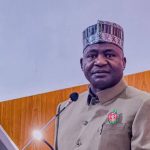

Recntly TRT World spoke with Nigeria’s Defence Minister, General Christopher Musa, on rising security threats, military partnership with Turkey, the United States, regional instability in West Africa, and efforts to protect civilians while safeguarding national sovereignty.
Let’s get straight into it. How would you describe the current state of Turkey-Nigeria defence relations?
Wonderful. It didn’t start today. It started quite a long time. What the President is trying to do is to try to foster it and make it more strategic in what we are doing. Both countries have been very close, have shared close relationships over time.
We want to leverage on that. Turkey is a great country that has done great things to the world. It has helped in stabilizing the area.
We want to tap into that and continue to work together.
What are the strategic objectives of your country’s military cooperation with Turkey?
It has to do holistically with training, production of equipment. We want to leverage on the experience of Turkey.
Turkey has, over time, had issues with terrorism and how they have been able to tackle it and be able to remain very peaceful and developing. Nigeria wants to tap into that. The challenges we are having in Nigeria, we feel because we don’t produce most of the equipment we need, has made it very difficult fighting this terrorism.
We want to leverage on the experience, the training, the capacity that Turkey has in also improving on our own capacity to secure our country.
It’s good you’ve talked about intelligence sharing because Turkish Foreign Minister Hakan Fidan, let me just specifically say what he said recently, emphasized on solidarity in combat. Does this mean we are moving towards real-time intelligence sharing with Ankara? Also, is the relationship between Turkey and Nigeria strictly transactional and equipment-based?
No, it’s holistic. Terrorism is all over the world and so if you have to address it, you have to have countries that have the reach. Turkey has the experience, they have the know-how, they have the knowledge, they have the intelligence that we can leverage on. Because, like we said, Boko Haram is not only in Nigeria.
In fact, Africa is facing a daunting task in dealing with it. You know the AES countries, Mali, Chad, and Niger Republic. It’s stretching up into Benin Republic.
Mozambique is having the same issues. Libya is still not stable. So, it’s a holistic thing that we need.
I want to leverage on these experiences and the reach that Turkey has in order to address our own issues. So, it’s beyond just the military aspect, it’s a holistic aspect also into social welfare. How they have been able to use that to address poverty, illiteracy, and I think those are critical aspects.
Beyond just buying hardware, you know, from Turkey, what specific technology transfer agreements are in place to ensure that Nigerian engineers can maintain, you know, what you’ve gotten from Turkey and eventually manufacture this system locally?
You know, beyond this, we’re also into the Navy too, we’re into ship production. The drones are part of it, including we have bought some APCs from here, some other aspects, counter IEDs, counter drones, and all these aspects into it. Now, it shows that we want to leverage on the knowledge and the technology that Turkey has in order to develop this in our country.
Last year, Mr. President, our President, signed the bill for our defense industry to cooperate and also work together with other countries so that we can develop our own capacity. Because it is one thing to buy, it’s another thing to sustain and maintain what you have. So, we’re working together, our engineers are having the technology, they will do the training, whatever we’re buying, this technology will be transferred to us so that we’ll also produce in situ.
Now, why do we need that? Nigeria has a population of over 250 million, with over 923 square kilometers. It’s massive. Our neighbors, most of them Francophone countries, with their own challenges too.
So, we need to be strong for the region, and I think that’s what we are leveraging on. So, we’re going to get this technology, we’re going to develop our own capacity to maintain and produce, and I think it’s a win-win thing on both parts. On the no-strings-attached policy, because Western allies often tie arms sales to human rights benchmarks, yeah, you agree with me.
So, Turkey is known for a no-strings approach. How does this partnership between Turkey and Nigeria change your operational freedom when deploying Turkey’s assets in domestic operations like, you know, the Project Guardian in the northwest Nigeria?
You know, truthfully, Nigeria is a signatory to human rights charter and all this, and we are professional enforcers. Even when you had issues of speculations or rumors of human rights abuses, it doesn’t happen anymore.
We are well-trained, we are well-prepared, and so working with Turkey is going to be okay because we know we have to secure the human rights of our citizens, which is, to us, is very critical. So, we don’t need any other person to go and give us as a standard because we already operate on that, and so Turkey took us into that, and I think we’re doing very well.
We’ve seen a distressing spike in mass abductions in the northwest of Nigeria, you can agree with me on that, with over 160 worshippers taken just, you know, a few days ago.
That’s not just a small number, this is a big number. Why does the military struggle to bring a permanent solution to what is happening in the northwest and present, you know, so that they can maintain a permanent presence in these hotspot rural districts like Kajuru?
Great question. The question is why. Why is somebody kidnapping somebody who is poor, who is just trying to live, who doesn’t have a penny to pay, and you collect, you want to collect a ransom. Who is going to pay the ransom? So, why is it kidnapping? There’s a tendency that people want to make Nigeria look unsafe, to make the government look weak, so that they can form political leverage. And besides that, Nigeria, like I mentioned, has a land area of almost 923,000 square kilometers.
It’s massive. So, ability to man all through is not there. Now, why sometimes people wonder, you take a hundred, how do you take them without the security forces? Most of these areas are areas where there’s no communication.
Now, what these guys do is that they have informants spread all over. And, you know, I mentioned the issue of the informants. So, what they do is that once troops are at this particular area, they give the information, nobody’s at that area.
And so, they move to such areas. And because sometimes the infrastructure to get there takes time, most times there are no communications. So, before you even get the information, the deed had already been done.
They had already gone before you get the information. So, efforts have been made. The government is doing all it can to ensure that it leverage and express out our communication system so that we can have real-time information when things are happening.
The recent U.S. strikes in Sokoto suggest a deeper, you know, level of foreign military involvement in Nigeria’s Nigerian soil. So, what is the specific rules of engagement, you know, agreement between Abuja and Washington regarding these operations?
No action can be taken by any foreign nation without the permission of the president. So, we’re working jointly.
We’re mapping the area jointly. We give where and when we think there’s a greater threat for them to take action on. What we can do, we do.
It is what is beyond us that we call for assistance. And it’s done all over the country, all over the world. It’s not the first time we’re doing.
Remember, Nigeria was in Sierra Leone. Nigeria was in Liberia. Nigeria was in Congo.
Nigeria was in Burma. So, we’ve done a lot in other countries too. Now, with the asymmetric warfare, because of its challenges, and that’s why we need the support.
It’s a cooperative one, and we’re working together. So, no action is going to be taken without our own permission. So, sovereignty is not compromised.
Let’s have a look at the flip side of the coin. Trillions of naira have been allocated to defence in the last three budget cycles. You can agree with me, Mr. Minister. Can you point to one specific technological or structural game changer that justifies the sort of spending to the Nigerian taxpayer? The first thing is, at least, how was it before? How is it now?
Before now, it used to be so bad in Nigeria, but now you can find ideas. You can count one or two attacks, one or two kidnappings here, and it has been addressed. Like I said, we’re all over the country.
The armed forces is fighting on all fronts. We have three, six zones in the country. We’re almost everywhere trying to make sure that there’s peace.
Now, again, people always mention about the budget, and I said, look, everything we buy, from the bullets to everything we buy in foreign currency, if you look at our budget and you convert it to foreign currency, what can it fetch you? I’ll just give an example. A medium-range TB2 drone missile is about $150,000. That’s to over 200 million naira, just one.
So, it is very, very expensive. American budget this year is over $1 trillion. Trump wants to make it $1.5 trillion, and they produce the equipment.
So, to tell you that defense is expensive. So, every penny that is released is spent wisely. We have to take care of the troops.
We have to build our own capacity, and I can tell you, now we have the capacity that we can take a burnt-down APC and refit it and bring it back into service using our own local resources.
Right, and some of these threats that Nigeria is facing is coming from neighboring countries. So, how effective is Nigeria’s security cooperation with neighboring countries in tackling close borders?
Wonderful, wonderful. We have the Multinational Joint Tax Force that has to do with Nigeria, Niger, Chad, and Cameroon. Niger pulled out temporarily, but bilaterally, we are working with Niger. We are working with the Benin Republic.
We are doing a lot. Of recent, the coup in Benin. We had to step in in order to assist them in ensuring that there was no coup, and that’s assisted in ensuring that democracy continues to strive.
So, we’re doing well. We have a good relationship, even with Niger, that people taught because they pulled out from ECOWAS. We know the importance and the relevance of working together.
We share a border of about 1,500 kilometers with Niger. It’s massive. The population in Niger is just less than 30 million, and the size of Niger is almost one and a half size.
So, you can imagine that space. Now, why do we have these issues? Since Libya went down, the whole of that Sahel area has become open, and so it’s a work in progress to ensure that we get those things really, really covered.
And this is for the sake of families of these military officers who are wondering what is the fate of their loved ones.
We’re talking about the military officers who are expected to face trial over a coup plot.
I mean, everybody knows, you know the repercussion when you take such actions. So, I’m sure they’ve made up their minds.
They must have considered their families. But the truth about it is that even at that, the armed forces, the government is ensuring that the family, they are treated fairly. The announcement just came out.
So, they’re going to face court-martials, as usual. The court-martials will be free and fair. They will be allowed to get their own counsels that will defend them on their actions.
And the family members are not left alone. The government is also making sure that at least they take care the wives and the children need to be looked after. But the main perpetrators already know the repercussion to their action, and I’m sure they’re ready to face the rot.
And finally, let me just take you back to, you know, recently President Donald Trump alleged that Christians are being killed, were being killed in Nigeria. As the Defense Minister of Nigeria, what military consequences does your country face when such allegations arise internationally?
Well, the truth about it is that, you know, there’s a lot of information, misinformation, like I said. Nigerians are being killed, holistically.
Christians, Muslims, Atheists, and all. All we want is these killings to stop. And that’s what we’re doing.
That’s what we’re concentrating on. And we are showing Nigerians that we’re going to protect them together, working. So, whatever anybody is bringing from outside, I think we’ve had several meetings with the Americans.
Just a few days, we had this general, where we discussed this, made it very clear that, yes, areas where Christians are more, more Christians will be killed. Where Muslims are more, more Muslims will be killed. All right.