




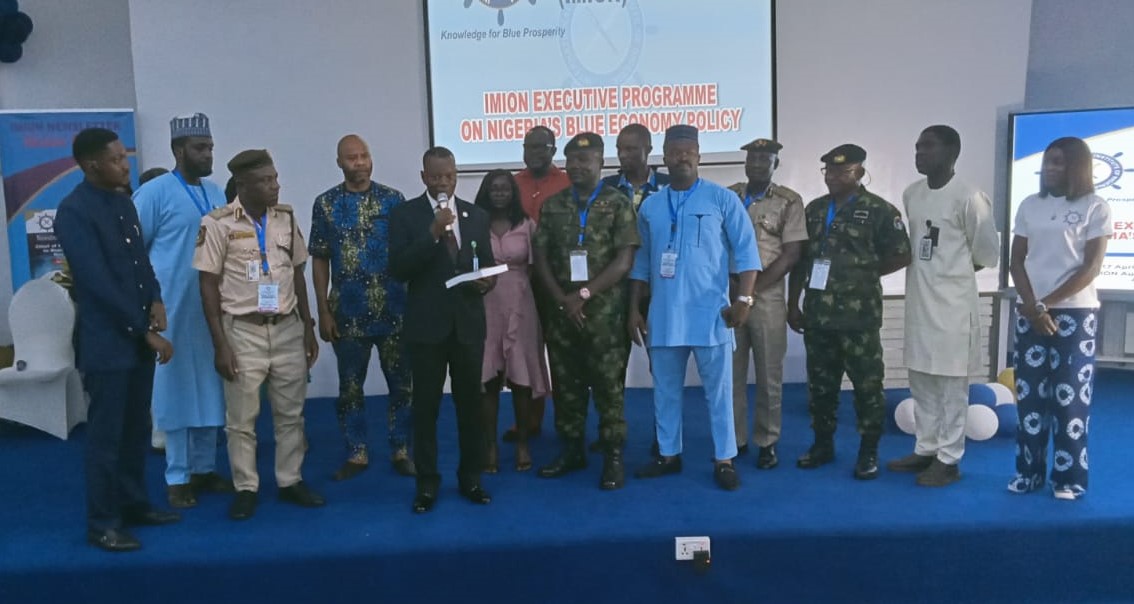
The International Maritime Institute of Nigeria has emphasised the need for collective action among stakeholders to ensure the successful implementation of Nigeria’s blue economy agenda.
The institute noted that no single government agency or sector can effectively drive the policy, stressing that collaboration and strategic alignment remain critical to achieving sustainable outcomes.
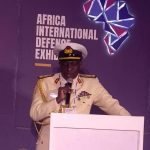
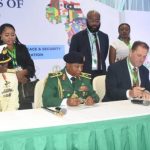
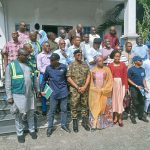
The Director General of IMION, Dr. Thaddeus Udofia, made this known at the conclusion of a three-day executive programme on Nigeria’s Blue Economy Policy organised by the institute.
Udofia said the programme underscored the importance of cooperation among key players, including government institutions, academia, civil society, maritime industries, and the security sector.
According to him, the institute remains committed to positioning itself as a centre of excellence in maritime affairs through the deployment of technology and capacity-building initiatives.
He explained that IMION’s programmes cover critical areas such as maritime security, ocean governance, environmental sustainability, energy security, and the broader blue economy.
“We have examined policy frameworks, explored innovative approaches, and emphasised the importance of collaboration across sectors, thereby exemplifying the concept popularly known as the Triple Helix,” he said.
Udofia further noted that the blue economy encompasses a wide range of industrial and service sectors, involving diverse stakeholders from marine research and the knowledge industry to aquaculture and biotechnology.
He added that participants at the programme engaged in extensive discussions on both the opportunities and challenges associated with Nigeria’s blue economy, with a focus on practical solutions to enhance implementation.
Earlier, a consultant to the institute, Mfon Usoro, highlighted the growing importance of marine resources, particularly their relevance to the health sector.
She stressed the need for improved coordination within the blue economy ecosystem, especially in emerging areas such as seabed mining.
Usoro identified the absence of marine spatial planning in Nigeria as a major obstacle to effective collaboration among stakeholders.
“Since numerous stakeholders have been identified within the blue economy ecosystem and its services, there must be proper coordination. Some of this can be achieved through marine spatial planning, which Nigeria currently lacks,” she said.
She warned that without a structured framework, overlapping responsibilities and conflicting mandates among government agencies and private operators could hinder progress.
According to her, instances may arise where one regulatory authority restricts certain activities such as deep-sea mining or oil exploration in designated coastal areas, while other operators may already possess licences issued by petroleum regulators for similar operations within the same zones.
Usoro explained that marine spatial planning would provide clarity by allocating specific areas for designated uses, including conservation zones and commercial activities, thereby reducing conflicts and enhancing efficiency.
She further noted that effective implementation of the blue economy policy would require the active involvement of multiple sectors, including national planning, environment, technology, marine and blue economy, petroleum resources, education, and gender-focused institutions.
The International Maritime Institute of Nigeria reiterated its commitment to supporting policies and initiatives that will strengthen maritime governance, promote sustainable development, and unlock the vast economic potential of Nigeria’s marine resources.