


Nigeria must exercise caution in handling the grievances of retired military personnel, as unresolved pension issues could have wider implications for national security, military morale and public confidence in government.
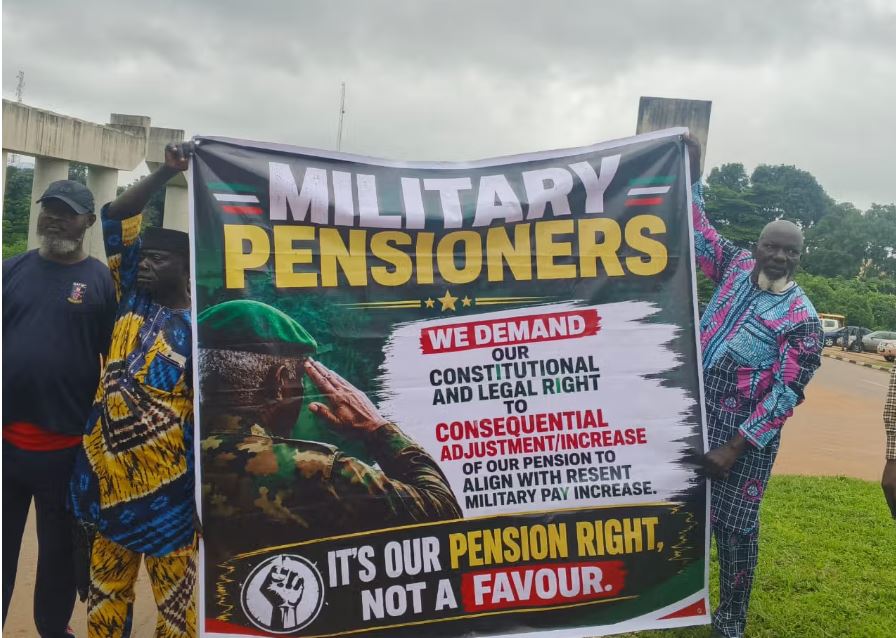
The warning follows the protest by military pensioners in Abuja over the non-implementation of consequential adjustments to their pensions following salary increases approved for serving military personnel.
The pensioners, who gathered near the Ministry of Defence, were prevented by security personnel from accessing the ministry’s premises. They later moved to a road median where they addressed journalists and demanded that the government review their pensions to reflect approved salary adjustments.
Speaking on behalf of the protesters, retired Lieutenant Colonel Innocent Anas said military pensioners had served the country and deserved to be treated fairly.
“We have paid our dues in patriotic service to this nation,” Anas said, insisting that pensioners were entitled to consequential adjustments whenever the salaries of serving personnel were increased.
The issue goes beyond the immediate demand for higher pensions. It touches on the relationship between the Nigerian state and those who spent years serving in its armed forces.
Military personnel accept significant sacrifices during their careers. Many are deployed to conflict zones, separated from their families for extended periods and exposed to considerable risks in the course of defending the country.
For this reason, the welfare of retired personnel remains an important component of military administration.
Pension disparity could create resentment
One of the major concerns raised by the pensioners is the possibility of disparities between the pensions of older retirees and the earnings or pensions of more recent retirees.
Anas cited situations where recently retired lower-ranking personnel could receive pensions that are higher than those of officers who retired many years earlier.
Such disparities, if allowed to persist without a credible explanation or adjustment mechanism, could create a sense of injustice among retired personnel.
It could also undermine confidence among serving officers and soldiers who are still in active service.
Every serving military personnel is ultimately a future retiree. How the government treats today’s pensioners therefore sends a message to those currently serving about what they can expect after leaving the military.
Government must avoid confrontation
The deployment of soldiers, police personnel, NSCDC officers, tanks and other security vehicles to prevent the pensioners from accessing the Ministry of Defence may have been intended to protect government facilities and maintain order.
However, the Federal Government must be careful to ensure that security measures do not turn a legitimate welfare grievance into a confrontation between the state and retired servicemen.
Military pensioners are not ordinary protesters. They are former members of an institution built around discipline, loyalty and service to the nation.
A prolonged dispute with them could become politically and socially sensitive, particularly if the retirees believe that peaceful avenues for resolving their grievances are being ignored.
The government should therefore prioritise dialogue, verification of the pension claims and a transparent explanation of what is legally and financially due to the retirees.
Salary increases must be properly explained
President Bola Tinubu recently approved salary increases ranging from 30 per cent to 80 per cent for serving military personnel.
Under the arrangement, officers above the rank of colonel are to receive a 30 per cent increase, while personnel from colonel to warrant officer are to receive 50 per cent. Those from private to staff sergeant are to benefit from an 80 per cent increase.
The pensioners are asking why corresponding adjustments should not be reflected in their pensions.
The government should clearly explain the legal framework governing consequential pension adjustments and indicate whether the retirees qualify under existing laws and regulations.
If adjustments are due, the government should provide a definite implementation timetable.
If they are not due under the applicable framework, the authorities should explain the position publicly rather than allowing uncertainty and rumours to fuel further protests.
Pensioners deserve respect
Beyond the financial aspect, the government must recognise the symbolic importance of military pensioners.
Many of them served during periods when Nigeria faced civil conflict, insurgency, communal violence, peacekeeping operations and other security challenges.
Their contribution cannot simply be reduced to their monthly pension.
A government that expects young Nigerians to enlist, risk their lives and remain loyal to the nation must demonstrate that service will be respected after retirement.
This does not mean that every demand made by pensioners must automatically be accepted. Government has a responsibility to protect public finances and apply the law consistently.
But legitimate grievances must be investigated and addressed through institutional channels.
A test of confidence in the military
The military remains one of the country’s most important national institutions. Maintaining confidence within its ranks requires more than providing equipment and salaries to serving personnel.
It also requires confidence that the government will honour its obligations to those who have completed their service.
If retired personnel repeatedly have to protest over pensions and allowances, it could send a damaging message to serving troops.
The Federal Government should therefore treat the current dispute as an opportunity to review the pension system, identify outstanding obligations and establish a transparent mechanism for implementing approved adjustments.
The objective should not merely be to stop the protests.
It should be to resolve the underlying grievances in a manner that is lawful, financially sustainable and respectful of those who served Nigeria.
The warning is simple: Nigeria must not allow a pension dispute involving retired military personnel to develop into a broader crisis of trust between the armed forces and the government.