






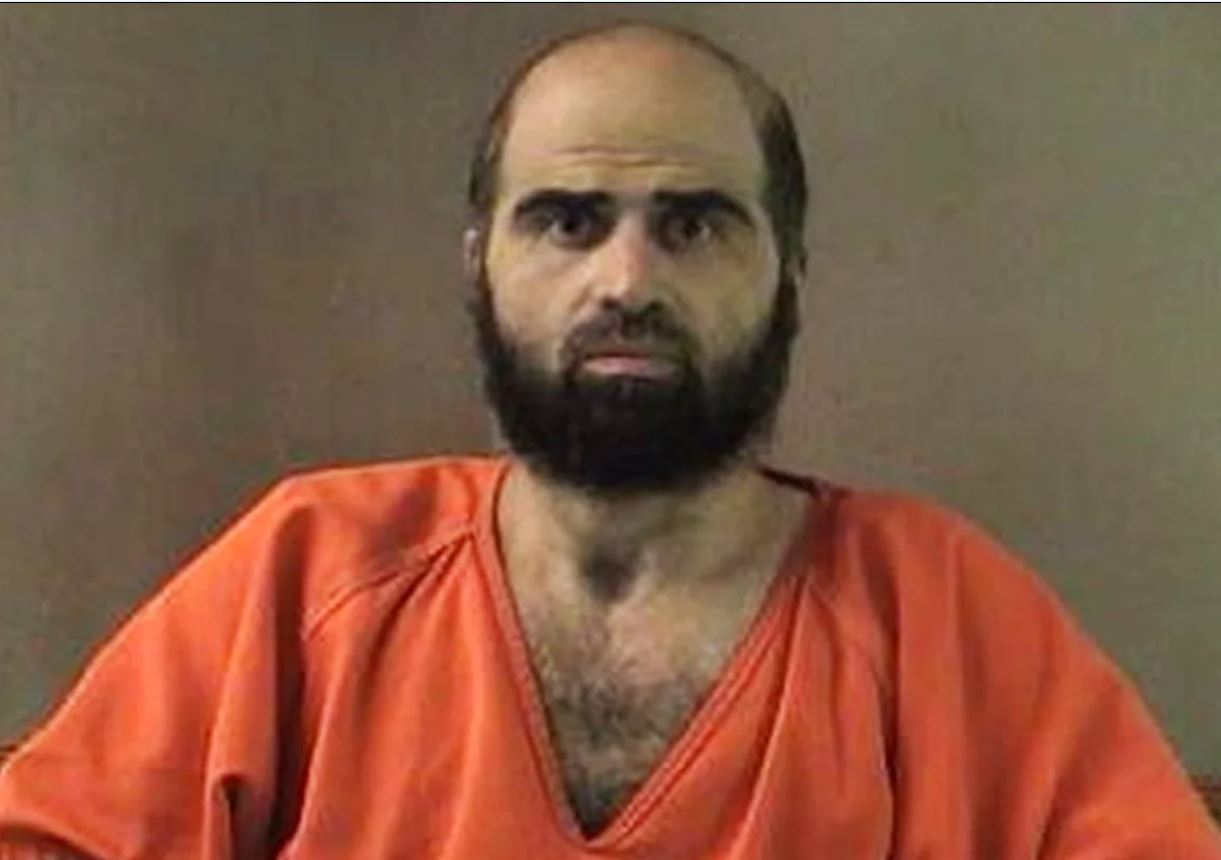
President Donald Trump has approved the execution of Nidal Malik Hasan by U.S. Army firing squad for the 2009 mass shooting at Fort Hood, Texas, that killed 13 people, the Pentagon announced Monday.
Chief Pentagon spokesman Sean Parnell said on X that Secretary of War Pete Hegseth recommended the method and that Trump approved it. “The Secretary of the Army will set the time and place of the execution. Judgement day for Hasan has finally come,” Parnell wrote.
Hasan, a former Army major and psychiatrist, was convicted in a 2013 court-martial of 13 counts of premeditated murder and 32 counts of attempted premeditated murder. He was sentenced to death and exhausted his regular appeals in 2025.
The U.S. military has not carried out an execution since 1961 and has not used a firing squad for a service member since World War II. Four men, including Hasan, remain on military death row at Fort Leavenworth, Kansas.
In the Nov. 5, 2009, attack, Hasan entered the Soldier Readiness Processing Center at Fort Hood, where troops were preparing for deployment. Witnesses said he shouted “Allahu akbar” before opening fire with a laser-sighted handgun, killing 13 and wounding more than 30. According to the Associated Press, Hasan later said he acted to prevent soldiers from deploying to Afghanistan and killing Muslims. He represented himself at trial, offered little defense, and told jurors the evidence would show he was the shooter and that he had “switched sides.”
Trump’s approval begins procedural steps toward the execution. Under an Army plan known as Operation Resolute Justice, condemned service members would be transferred from Fort Leavenworth to the federal execution facility in Terre Haute, Indiana. The Army aims to be prepared to carry out an execution no sooner than 60 days and within 150 days of presidential approval. Hasan could still delay the process by filing a habeas corpus appeal in civilian federal court challenging his detention.
The Pentagon did not explain why a firing squad was chosen over lethal injection, the method specified in current military regulations, or whether those rules would need revision. Separately, the Justice Department directed the Bureau of Prisons in April to expand federal civilian execution protocols to include methods beyond lethal injection, including firing squads; that change does not apply to military cases.
The announcement followed a failed lethal-injection attempt of Christa Pike in Tennessee, after which the state’s governor halted further executions this year and ordered a review. Asked about the Tennessee case, Trump called it “an interesting situation” and said lethal injections “shouldn’t be very difficult.”
Firing squads have seen limited recent use at the state level. Five states authorize them: Idaho, Mississippi, Oklahoma, South Carolina and Utah. South Carolina carried out three in 2025, the first in the United States since 2010. Idaho made the firing squad its primary method effective July 1.
Military death sentences remain rare. President George W. Bush approved the execution of Army Spc. Ronald Gray in 2008, but a judge blocked it; Gray remains at Fort Leavenworth. The last military execution was the 1961 hanging of Pvt. John Bennett.