






The Economic Community of West African States (ECOWAS) has deployed military personnel to Benin Republic following a failed attempt by a group of soldiers to seize power at the weekend, adding another chapter to a growing pattern of political instability across the region.
The development comes barely a month after the ouster of the President of Guinea-Bissau and months after similar disruptions in Niger, Burkina Faso and Mali.
Officials in Cotonou confirmed that President Patrice Talon remained in power after security forces moved quickly to contain what authorities described as an effort by dissident soldiers to “destabilise the state.” The Beninese government insisted by Sunday night that the situation had been brought under control.
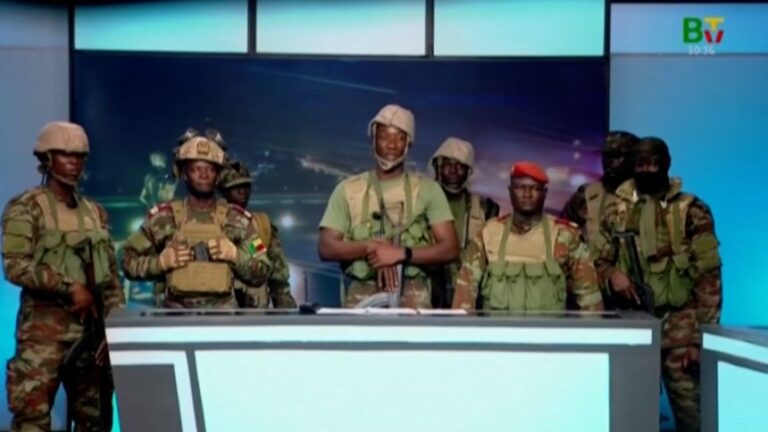
Soldiers Appear on State TV
The drama began early Sunday when a group of uniformed soldiers appeared on national television announcing that President Talon had been removed from office and that all state institutions were dissolved. The group identified itself as the Military Committee for Refoundation, or CMR, and introduced Lieutenant Colonel Pascal Tigri as head of an interim military authority.
Reading from a prepared statement, the soldiers accused the president of mishandling security challenges in northern Benin, cutting healthcare funding, increasing taxes and restricting political activities. They also pledged a “new era” where “fraternity, justice and work” would be restored. The broadcast ended abruptly after the television signal was cut.
Government Says Attempt Was Quickly Contained
By evening, Benin’s interior minister announced that loyal forces had foiled the takeover. In an address to the nation later that night, President Talon praised the army for remaining “loyal to the republic” and said remaining pockets of resistance had been cleared.
“This treachery will not go unpunished,” the president said, describing the perpetrators as “adventurers” seeking to drag the country into chaos.
According to French news agency AFP, government officials maintained that Talon was safe and insisted that the uprising involved only “a small group” who temporarily controlled the national broadcaster. The capital city of Cotonou, they added, had remained secure.
Calm Returns to Cotonou
Reports on Monday indicated that commercial activities had resumed with minimal visible military presence. While sporadic gunfire was heard and soldiers were sighted in parts of the city earlier in the day, residents were largely said to be carrying on with their daily routines.
Authorities disclosed that at least 14 suspects had been arrested. A statement from Interior Minister Alassane Seidou said the armed forces had “retained control of the situation and foiled the manoeuvre.”
ECOWAS Responds, Nigeria Leads Support Effort
ECOWAS condemned the attempted coup as “a subversion of the will of the people of Benin” and directed members to provide military support to defend constitutional order. Nigeria, Sierra Leone, Ivory Coast and Ghana were identified as contributing forces.
It is understood that Nigerian Air Force aircraft carried out air operations in support of Benin’s troops on Sunday after multiple requests were made by the government in Cotonou. Nigerian presidential spokesman Bayo Onanuga confirmed that Benin sought both air and ground reinforcement.
President Bola Tinubu, who also serves as ECOWAS Chairman, said Nigerian troops acted in accordance with regional defence protocols. “They have helped stabilise a neighbouring country and have made us proud of their commitment to sustaining democratic values since 1999,” he stated.
Tinubu’s office added that Nigerian jets were ordered to take control of Benin’s airspace and later supported ground forces after coup plotters attempted to regroup around military infrastructure and the national television station.
A Region Under Strain
Benin has largely been considered one of West Africa’s more politically stable democracies. The country’s last successful coup occurred in 1972. Analysts warn, however, that the recent pattern across West Africa, involving armed takeovers in at least six states since 2020, has heightened anxieties ahead of Benin’s presidential election scheduled for April.
The vote is expected to mark the end of President Talon’s tenure, adding political uncertainty in a region already struggling with armed insurgency, economic tensions and public distrust in civilian governments.
While authorities insist Sunday’s incident has been contained, many in the sub-region will view the events in Benin as part of a larger and still-unfolding struggle over democratic governance in West Africa.