







An attempt by three men to embark on an unauthorised sea journey took a dangerous turn after they were discovered hiding inside the propeller compartment of a merchant vessel sailing out of Lagos.
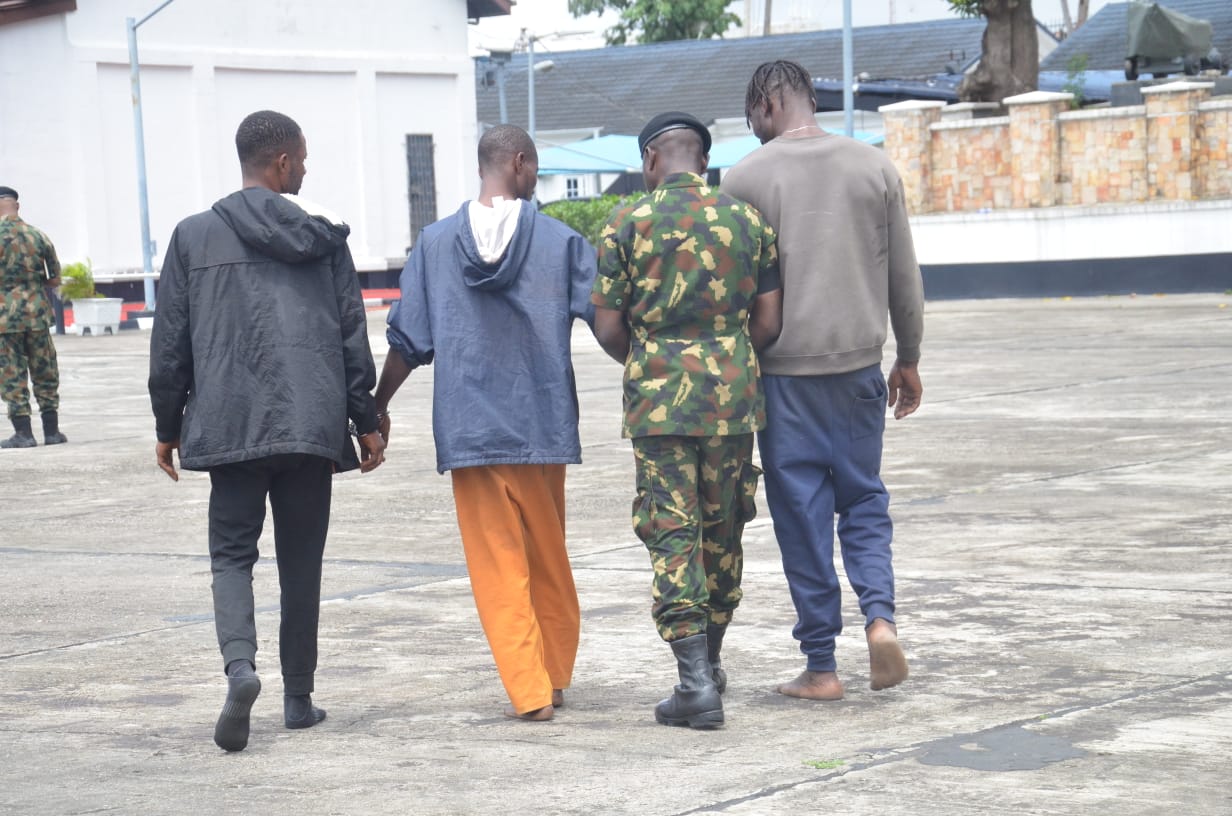
The men, identified as 30-year-old Isaiah Oyetayo, 26-year-old Goddey Ajinde Samson and 28-year-old Popoola Felix, were intercepted by the Nigerian Navy after they allegedly gained access to MV MAERSK CALABAR at Apapa Port.
The incident, which occurred on Monday, September 14, 2026, has again drawn attention to the dangers posed by stowaway attempts and the security challenges associated with unauthorised access to commercial vessels.
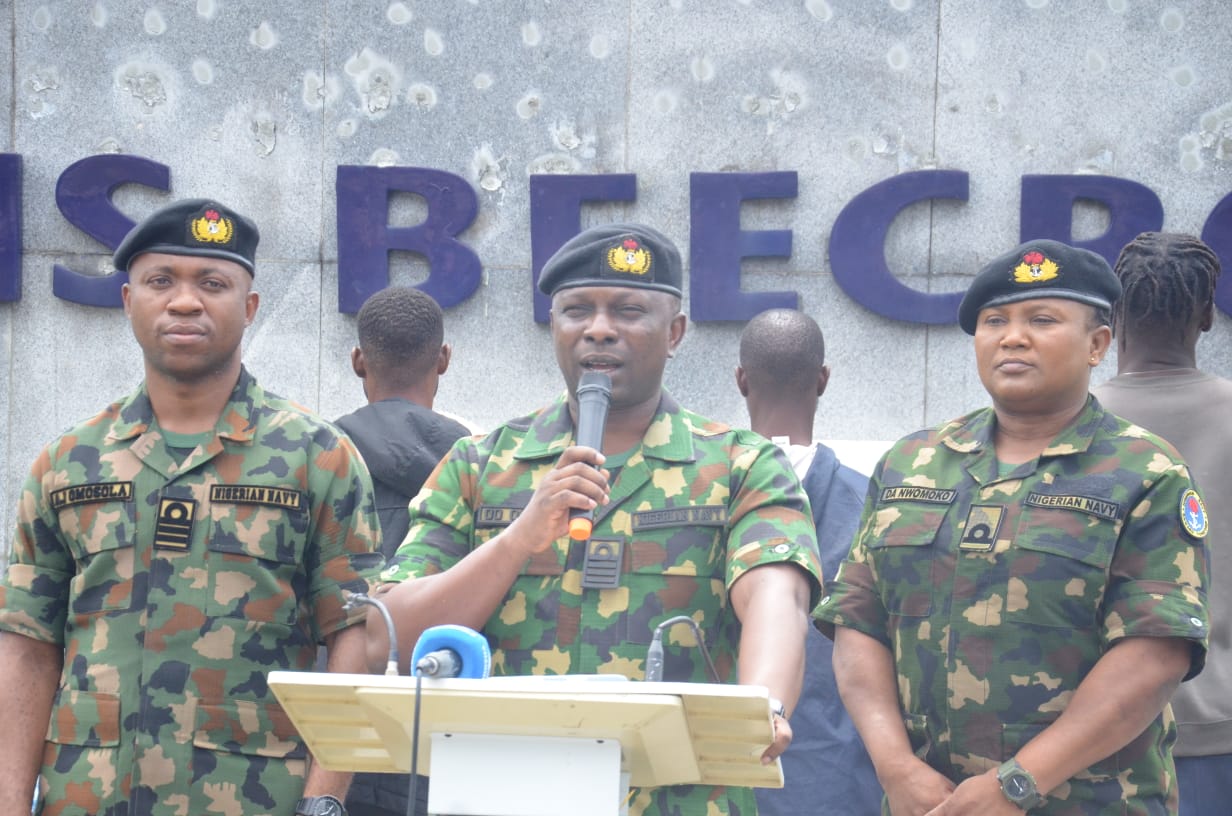
According to the Commander of Nigerian Navy Ship (NNS) BEECROFT, Commodore A. Adams-Aliu, the naval formation received information from the Western Regional Control Centre that prompted the deployment of its Quick Reaction Team stationed at Tarkwa Bay.
The team subsequently intercepted MV MAERSK CALABAR while the vessel was underway around the Lagos Fairway Buoy.
The naval personnel searched the vessel and located the three suspects inside the propeller compartment, from where they were safely extracted.
The suspects were taken to NNS BEECROFT for preliminary investigation and profiling before being handed over to the Nigeria Immigration Service (NIS) on Wednesday, September 16, for further investigation and necessary action.
Investigations conducted by the Navy indicated that the suspects allegedly used a canoe to gain access to the merchant vessel while it was at Apapa Port.
They reportedly concealed themselves in the propeller compartment before the vessel commenced its voyage.
The location where they were found is particularly significant because it is not designed for human habitation and can expose anyone hiding there to severe danger once a vessel is underway.
Beyond the risk to the individuals involved, the Navy said such unauthorised access also presents safety and security concerns for the vessel, its crew and maritime operations.
The incident has therefore highlighted the importance of effective monitoring of vessels and maritime facilities, particularly at ports and other points where unauthorised persons may attempt to gain access to ships.
The successful interception followed information sharing between maritime security agencies and the operational response of the NNS BEECROFT Quick Reaction Team.
The Navy has consequently urged parents, guardians and other authority figures to discourage young people from attempting dangerous journeys through irregular migration routes.
Commodore Adams-Aliu stressed that young people need to be properly sensitised about the risks associated with attempting to travel illegally by sea, noting that the consequences could extend beyond the individuals involved to affect wider maritime safety and security.
Stowaway incidents can also create uncertainty for ship operators, particularly when unauthorised persons are discovered after a vessel has left port. Apart from the immediate danger to the stowaways, their presence may trigger security procedures and investigations involving the vessel, crew and relevant authorities.
The NNS BEECROFT operation also underscores the role of maritime security agencies in maintaining vigilance around Nigeria’s coastal waters and responding to information concerning suspicious activities involving commercial vessels.
The Commander reaffirmed the commitment of NNS BEECROFT to supporting the Chief of the Naval Staff, Vice Admiral Idi Abbas, in achieving the objective of maintaining a professional naval force capable of safeguarding Nigeria’s maritime interests.
He said the formation would continue to contribute to joint operations aimed at protecting national sovereignty and maintaining internal stability.
For the three suspects, the attempted journey ended before the merchant vessel could proceed farther into the Atlantic, with their interception leading instead to their transfer to immigration authorities.
The development serves as another reminder that the quest for irregular migration through the sea can expose individuals to hazards that are difficult to anticipate once a vessel leaves port.
It also reinforces the need for continued cooperation among the Nigerian Navy, Nigeria Immigration Service and other maritime stakeholders to prevent unauthorised access to vessels and strengthen security along Nigeria’s maritime routes.