






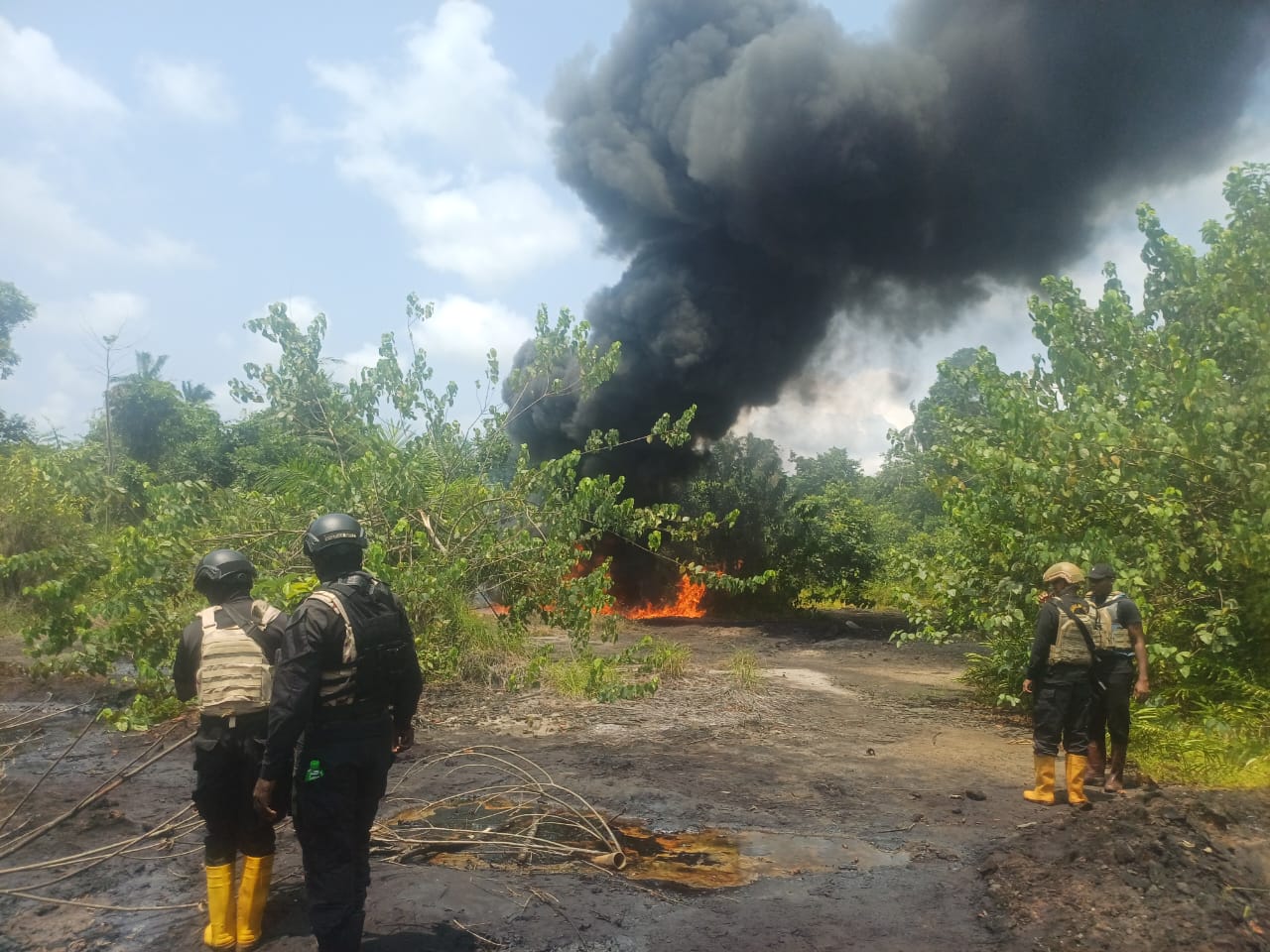
The Nigerian Navy has destroyed an illegal crude oil storage site within the Forward Operating Base (FOB) Bonny Area of Operations in Rivers State as part of ongoing efforts to combat crude oil theft and illegal bunkering under Operation DELTA SENTINEL.
The operation followed intensified directives from the Chief of the Naval Staff, Vice Admiral Idi Abbas, aimed at strengthening the Navy’s campaign against oil theft and other maritime crimes within Nigeria’s territorial waters.
Naval authorities disclosed that personnel of the Forward Operating Base Bonny made the discovery while conducting surveillance operations in the Opotumbi general area, a creek environment known for illegal oil-related activities.
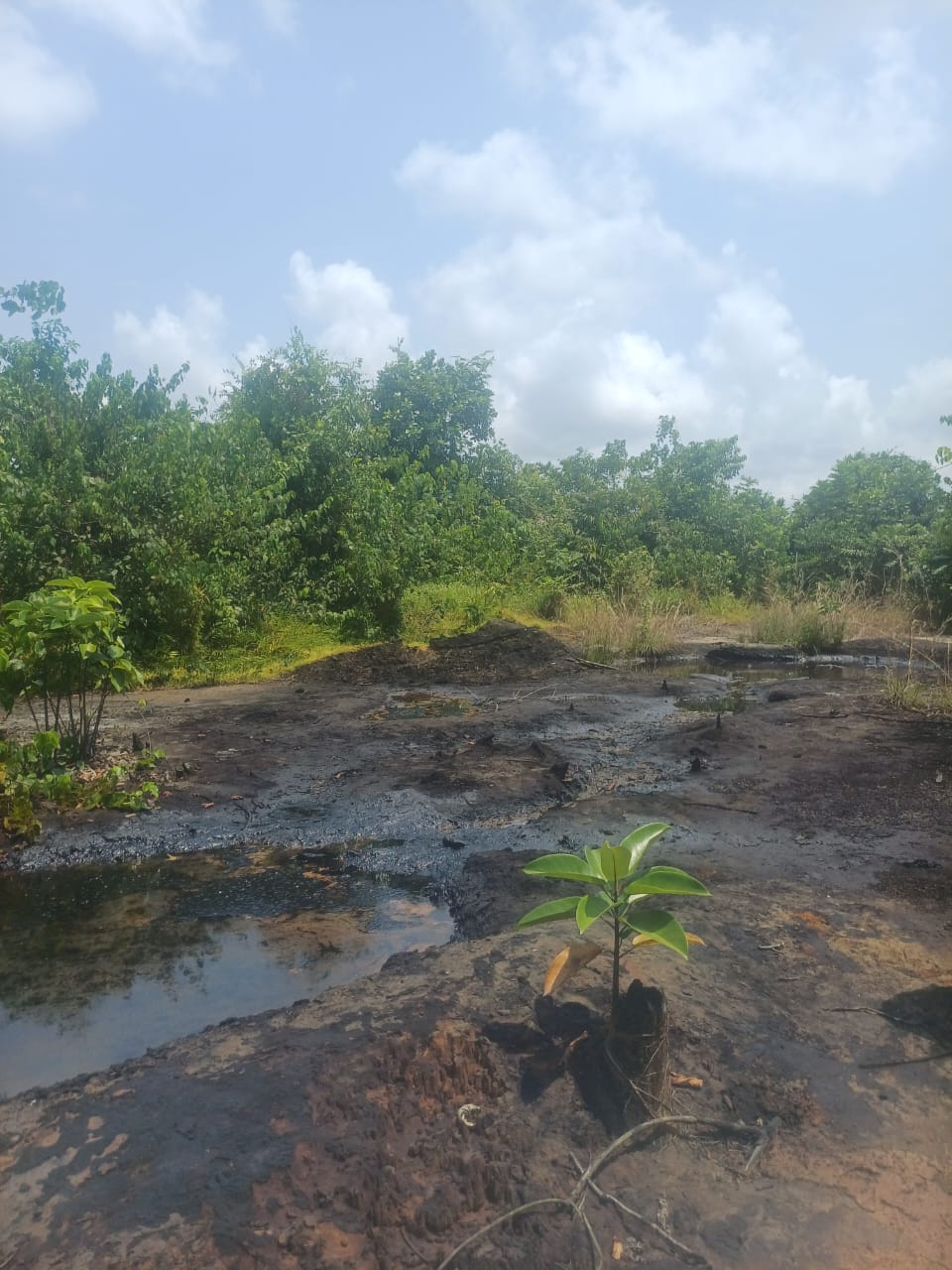
Using the Nigerian Navy’s maritime surveillance technology, the operatives identified concealed dugout pits hidden beneath thick vegetation deep within the creeks. The pits were strategically camouflaged to evade detection by security patrols.
Upon locating the site, naval personnel immediately moved in and conducted a detailed inspection of the area. The team discovered four dugout pits used as illegal storage facilities, containing a combined 17,500 litres of products suspected to be stolen crude oil.
The stolen products were subsequently destroyed in accordance with existing operational procedures after confirmation that the site was being used for illegal crude oil storage.
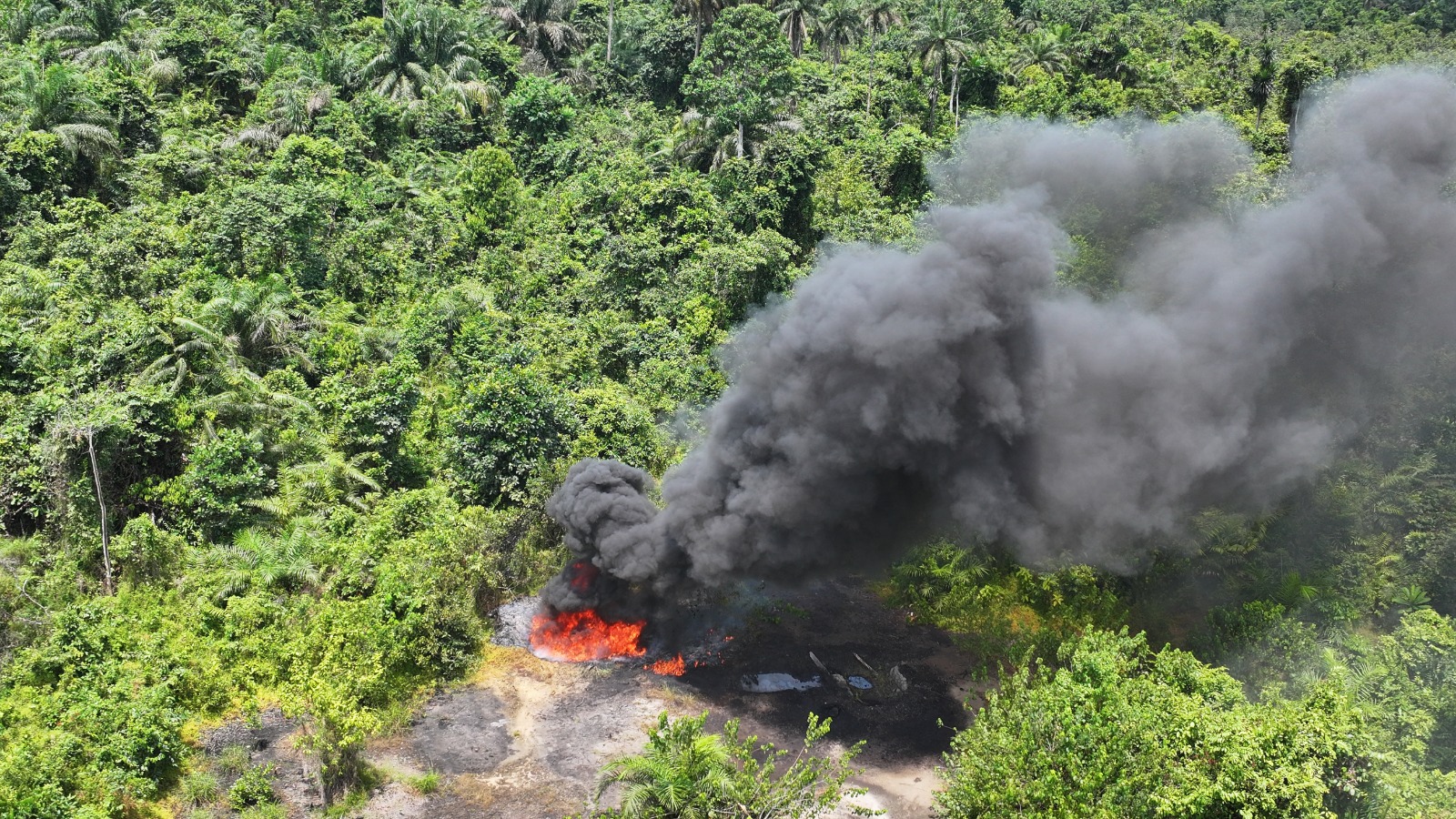
According to naval sources, the illegal storage facility is believed to be part of a wider network of crude oil theft operations carried out by criminal groups operating in the creeks of the Niger Delta region.
Crude oil theft and illegal bunkering have remained major security and economic challenges in Nigeria’s oil-producing areas. Criminal syndicates often tap pipelines illegally, siphon crude oil, and store the products in hidden pits or tanks before transporting them for illegal refining or sale.
Security experts note that the use of dugout pits concealed under vegetation is a common tactic employed by oil thieves to temporarily store stolen crude oil before it is moved to illegal refining camps or transported through illicit supply chains.
The Nigerian Navy has in recent years intensified operations across the Niger Delta waterways to dismantle such illegal infrastructure and disrupt the activities of oil theft syndicates.
Under Operation DELTA SENTINEL, naval units have continued to conduct aggressive patrols, intelligence-driven raids, and surveillance missions aimed at identifying illegal refining sites, storage facilities, and vessels involved in illicit maritime activities.
Officials say the integration of modern maritime surveillance systems has significantly improved the Navy’s ability to detect illegal bunkering operations, even in difficult terrain where criminals attempt to conceal their activities.
The successful destruction of the illegal crude oil storage site in the Opotumbi area is therefore seen as part of the Navy’s sustained efforts to safeguard Nigeria’s oil resources and protect critical national assets.
Naval authorities emphasised that crude oil theft not only undermines the country’s economy but also causes severe environmental damage to coastal communities, including pollution of rivers, destruction of aquatic life, and contamination of farmland.
By dismantling illegal storage facilities and destroying stolen crude products, the Nigerian Navy aims to weaken the operational capacity of criminal networks involved in economic sabotage.
The Navy also reiterated its commitment to maintaining continuous patrols and strengthening collaboration with other security agencies and stakeholders to combat maritime crimes across Nigeria’s coastal and riverine environments.
As part of the renewed operational push directed by Vice Admiral Idi Abbas, the Nigerian Navy assured Nigerians that it will sustain pressure on criminal elements threatening the nation’s economic interests and continue to protect the integrity of Nigeria’s maritime domain.