




Military authorities in Guinea-Bissau on Wednesday announced that they had assumed full control of the government, ordering the suspension of all electoral processes and the immediate closure of national borders.
The declaration came just three days after the country held its presidential and legislative elections, deepening uncertainty in the politically fragile West African nation.
The takeover followed reports of heavy gunfire around the presidential palace in Bissau earlier in the day. Witnesses said soldiers in uniform blocked and secured the main access road leading to the palace, prompting widespread tension and fear among residents.
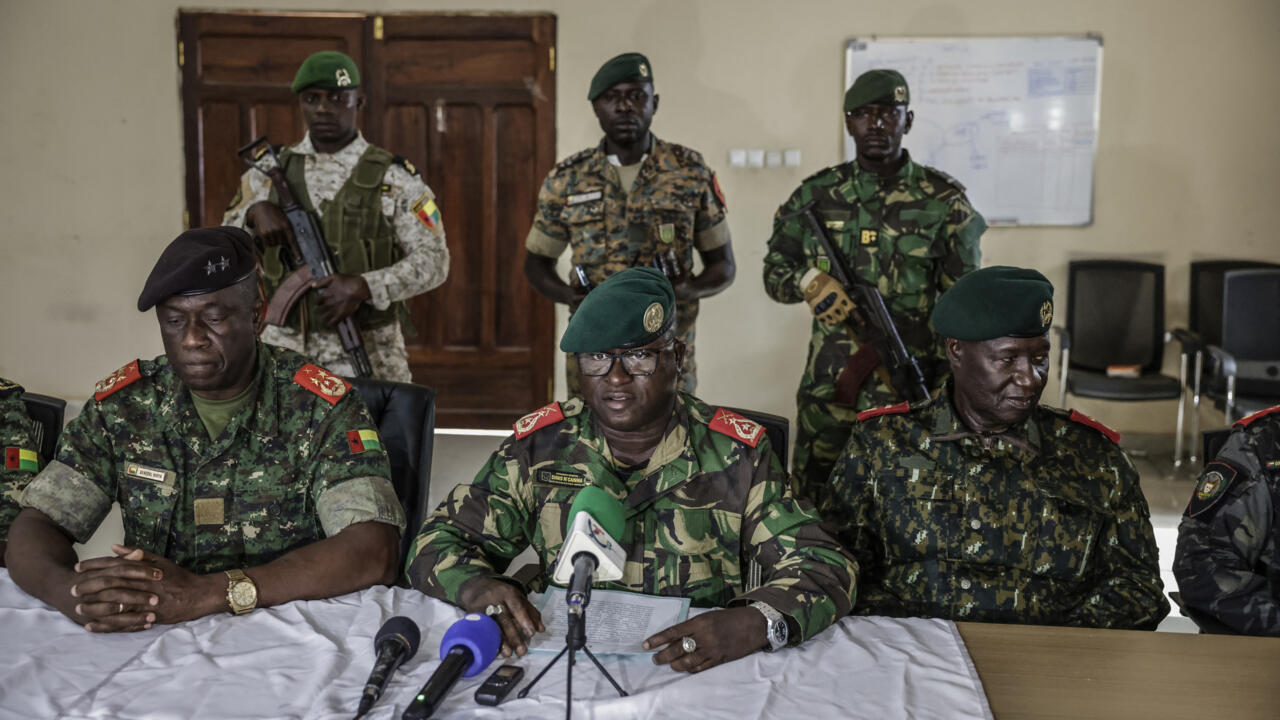
Senior military officers delivered the announcement from the army headquarters in the capital, where they read a formal statement confirming the assumption of power and outlining initial measures under their control. The situation remains fluid as citizens await further communication from the military leadership.
Spokesman for the military, Dinis N’Tchama, said in a statement that “the High Military Command for the reestablishment of national and public order decides to immediately depose the President of the Republic, to suspend, until new orders, all of the institutions of the Republic of Guinea-Bissau.”
He said the coup was triggered by “the discovery of an ongoing plan” aimed at destabilising the country, alleging that “domestic and foreign nationals” attempted to manipulate electoral results to implement the plot.
The soldiers announced the immediate suspension of the ongoing electoral process and all media activities, in addition to the closure of national borders.
Sunday’s presidential and legislative elections had been closely contested. Incumbent President Umaro Sissoco Embaló and opposition candidate Fernando Dias da Costa each claimed victory on Tuesday, even though provisional official results were not expected until Thursday.
Agency reports indicate that the West African nation has experienced a long history of political instability, including four successful coups and several attempted ones since independence. Another reported attempt occurred just last month.
Gunfire was heard around noon on Wednesday near the presidential palace, with roads leading to the area sealed off and checkpoints manned by heavily armed, masked soldiers, according to the Associated Press (AP).
The British Broadcasting Corporation (BBC) reported that witnesses heard gunfire at around 13:00 GMT, although it was unclear who was involved or whether there were casualties. The AFP news agency added that hundreds of people fled on foot and in vehicles as shots rang out.
Later, army officers appeared on state television announcing the formation of “the High Military Command for the Restoration of Order,” declaring that it would govern the country until further notice. The soldiers also urged the population to “remain calm.”
Guinea-Bissau, a former Portuguese colony of fewer than two million people, is one of the world’s poorest countries. It has experienced chronic political instability, including nine coups or attempted coups since 1980. There have also been two attempts to overthrow President Embaló, the most recent in December 2023.