






Retired Major General Abubakar Adamu, Nigeria’s first Commander of the Army Cyber Warfare Command, has called on African countries to expand their digital intelligence, surveillance and reconnaissance (ISR) capabilities to confront increasingly sophisticated terrorist threats across the continent.
Speaking during a December 3 webinar hosted by the Africa Center for Security Studies, Adamu described technology as central to both crisis response and routine security operations, stressing the importance of inter-agency collaboration.
“Technology is the driving force for what we are doing, whether in a crisis or in peaceful times,” he said. “There’s a lot of collaboration between all the agencies. Where one agency doesn’t have adequate tools, we now collaborate with all the agencies that have them.”
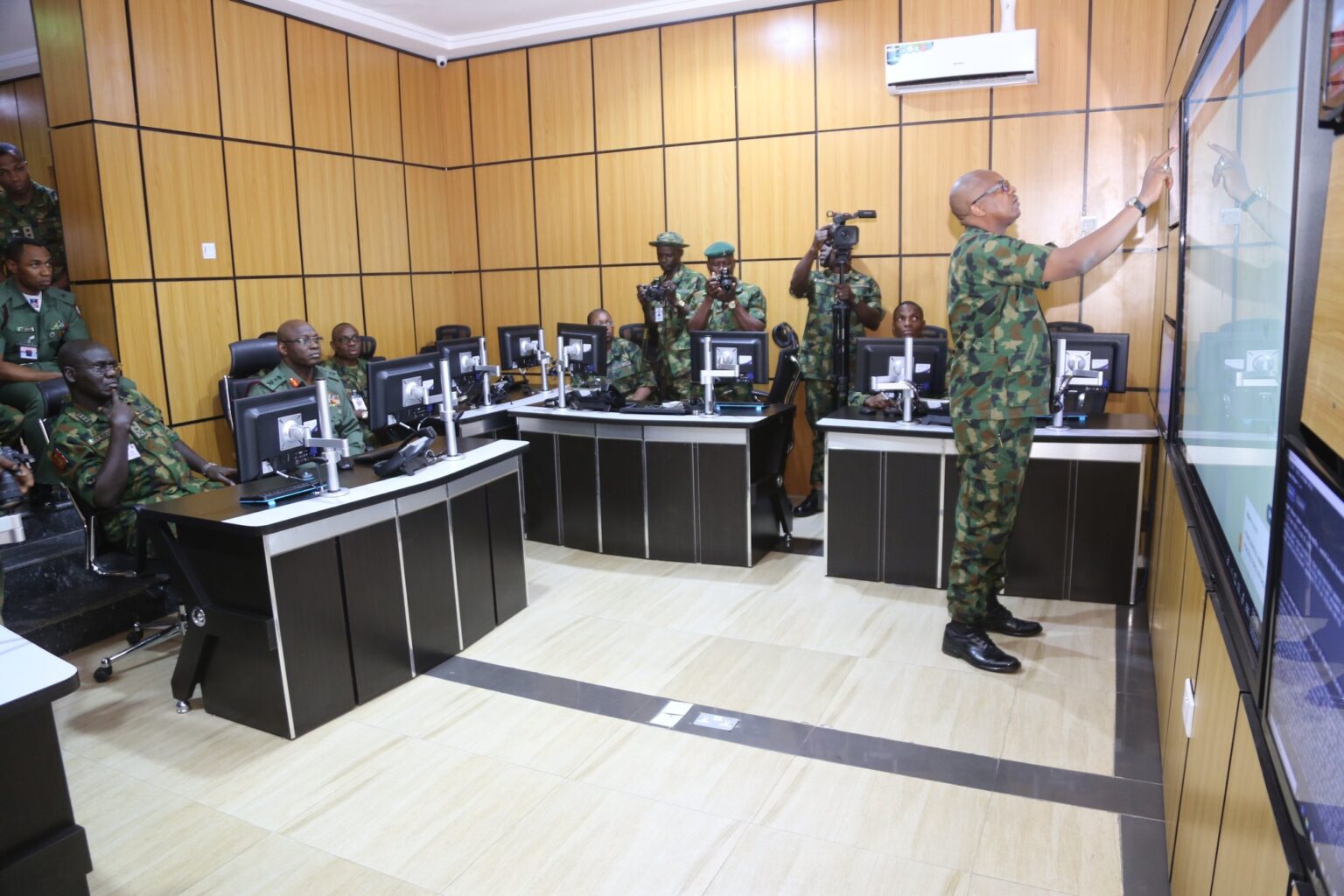
Adamu, who began his military career in 1987, said Africa must embrace technology-driven security solutions as extremist groups continue to innovate and exploit the digital space. Over his 35 years in service, he witnessed the Nigerian Army evolve alongside the global digital revolution, culminating in the establishment of the Army’s Cyber Warfare Command in 2022, which he pioneered.
He played a key role in helping Nigeria develop digitally enabled ISR capabilities, particularly in the fight against Boko Haram and other terrorist groups that expanded across the Lake Chad region during his years in uniform. He noted that as non-state actors become better funded and more technologically savvy, African security forces must stay ahead by leveraging digital tools.
He highlighted the growing use of open-source intelligence (OSINT), real-time social media monitoring and data integration platforms to track extremist activities, counter propaganda and disrupt recruitment networks.
“We do sentiment analysis for people that are online, particularly using Meta or Facebook, and also we respond to changing narratives,” Adamu said. “We use investigative software to analyze metadata and discussions, including on the dark web, to fight extremist propaganda and recruitment on the internet.”
The importance of combining digital tools with geospatial intelligence (GEOINT) has also been underscored by security experts. In a recent publication, Ahmed Labaran of the Nigeria Customs Service described GEOINT as a powerful discipline that integrates satellite imagery, geographic information systems and analytics to visualize activities and changes over time, particularly in conflict and humanitarian environments.
He cautioned, however, that the use of such data must be carefully managed to avoid political bias or harm to sensitive communities, especially in conflict zones.
Nigeria’s Armed Forces have been praised by analysts for providing a model for other African countries seeking to improve counterterrorism operations in cyberspace. Beyond the Cyber Warfare Command, Nigeria established the Defence Space Administration in 2016 to develop space and cyberspace capabilities in support of national security.
Adamu acknowledged that deploying advanced technology across Africa remains challenging, citing dependence on foreign products, infrastructure gaps and supply-chain constraints.
“Most of the products we get, we get them from outside,” he said. “We need to build our infrastructure, expand capacity and ensure reliable supply-chain management, while also strengthening collaboration within Africa and beyond.”
He warned that terrorist groups are exploiting the same technologies, making it imperative for African militaries to innovate, anticipate threats and refine operational effectiveness. According to him, modern ISR tools are critical for improving situational awareness, speeding up decision-making and protecting civilians.
Adamu urged African governments to harmonize ISR-related policies, particularly in areas such as data governance and supply chains, and to invest in technologies that support regional cooperation.
“Nigeria also has a national cybersecurity strategy,” he said. “I think it should be extended for wider adoption so that African countries, especially neighbors, can work together—because when it comes to technology, nobody operates in isolation.”
His call adds to growing advocacy for a coordinated, technology-driven approach to security as Africa confronts evolving threats in both physical and digital domains.