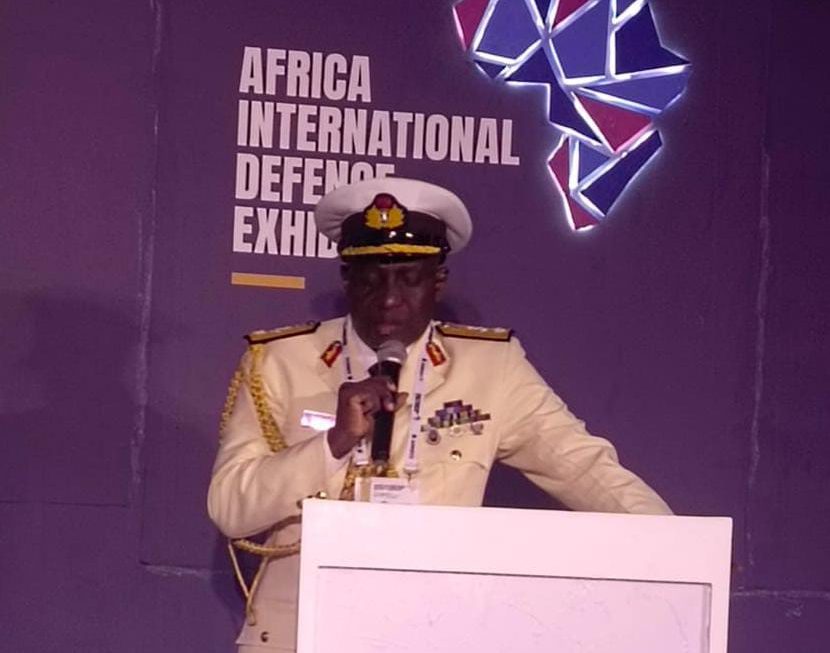










A former Chief of Defence Intelligence, Air Vice Marshal Monday Riku Morgan (rtd.), has proposed a five-level integrated security architecture for the North-Central region to tackle the growing insecurity confronting the area.
Morgan said the region’s major security challenge was not the absence of security agencies, but the lack of effective coordination among them.
He made the proposal in his keynote address at a security summit organised by the Federal Ministry of Defence in collaboration with the Office of the Special Assistant to the President on Community Relations.
The summit, themed “Collaborative Approaches to Strengthening Security in North-Central Nigeria,” focused on strengthening cooperation among government institutions, security agencies and communities in addressing insecurity.
Morgan proposed the establishment of a North-Central Integrated Security and Resilience Model (NCISRM), which would bring together intelligence fusion, inter-agency coordination, community participation, technology and local early-warning mechanisms.
According to him, achieving sustainable security in the region would require four fundamental shifts: moving from agency-centric to system-centric security; reaction to prevention; isolated intelligence to intelligence fusion; and government-only security to government-community partnership.
He explained that the first level of the proposed architecture should be a Regional Security Fusion Centre, linked to the Office of the National Security Adviser (ONSA) and the National Counter Terrorism Centre (NCTC).
The centre, he said, would serve as a central platform for fusing intelligence from various security and government agencies to develop a comprehensive regional threat picture and facilitate timely responses to emerging threats.
At the second level, Morgan proposed the establishment of State Security Coordination Centres in each North-Central state.
He said the centres should operate round the clock to provide situational awareness and coordinate security information, with the objective of identifying and responding to threats before they escalate into attacks.
The third level, according to the former intelligence chief, should consist of Local Security Networks in high-risk local government areas.
The networks would bring together security agencies, traditional rulers, local authorities, farmers, pastoralists, civil society organisations and trained community observers to strengthen intelligence gathering and early warning at the grassroots.
Morgan also proposed a fourth level focused on forest and rural security, stressing that the vast forests and rural spaces across the region should no longer remain “intelligence black holes.”
He argued that greater attention should be paid to securing remote areas where criminal groups could operate with limited detection, while improving intelligence collection and surveillance capabilities in such locations.
The proposed architecture, he said, would ultimately create a more coordinated security system capable of connecting strategic intelligence at the regional level with actionable information from states, local governments and communities.
Morgan’s recommendations come amid persistent security challenges in parts of the North-Central region, where communities have continued to face threats from banditry, communal conflicts, farmer-herder tensions and other forms of criminality.
He stressed that a sustainable solution required security agencies and communities to work together, with greater emphasis on prevention, intelligence sharing and rapid response rather than relying primarily on reactions after attacks have occurred.