



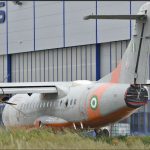
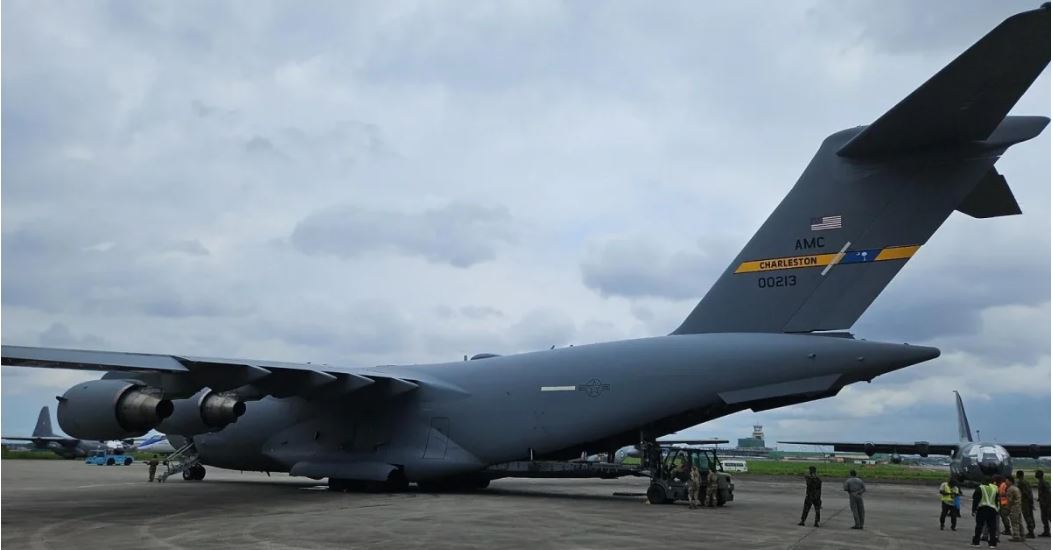
The arrival of a United States Air Force C-17 transport aircraft in Nigeria carrying military equipment marks another significant step in the growing defence and security cooperation between Nigeria and the United States, particularly at a time when the country continues to confront terrorism and other security threats.
The equipment, delivered as part of a Foreign Military Sales agreement between the two countries, is expected to support the operational capabilities of the Nigerian Air Force and strengthen Nigeria’s efforts to counter terrorism in the region.
Although details of the equipment and its specific operational applications were not disclosed, its delivery underscores the increasingly practical nature of the security relationship between Washington and Abuja. Rather than being limited to diplomatic engagements and military training, the partnership continues to involve the transfer of defence equipment and other forms of material support aimed at enhancing Nigeria’s capacity to respond to complex security challenges.
The use of a C-17 Globemaster III, one of the United States military’s principal strategic airlift aircraft, also highlights the logistical dimension of the partnership. The aircraft is designed to transport heavy equipment, personnel and supplies over long distances, making it particularly suited to the rapid movement of military materiel in support of partner nations.
For Nigeria, the significance of such assistance goes beyond the arrival of another consignment of military equipment. The country has for years been engaged in counter-insurgency and counter-terrorism operations, particularly in the North-East, where Boko Haram and Islamic State West Africa Province, ISWAP, have remained persistent threats.
The security situation has also evolved beyond conventional insurgency. Armed banditry, kidnapping, communal violence, violent extremism and transnational criminal networks have created a complicated security environment requiring greater coordination among the military, intelligence agencies and other security institutions.
Against this backdrop, efforts to improve the Nigerian military’s equipment, mobility, intelligence, surveillance and operational effectiveness remain critical.
The latest delivery therefore represents an element of a broader effort to strengthen Nigeria’s military capabilities. For the Nigerian Air Force in particular, improved equipment and logistical support can contribute to its ability to sustain operations across the country’s vast territory while supporting ground forces engaged in counter-terrorism and other security operations.
The partnership with the United States is also important because modern counter-terrorism operations increasingly depend on more than manpower and conventional weapons. Effective operations require reliable intelligence, precision, communications, mobility, surveillance and the ability to rapidly move personnel and equipment into areas where threats emerge.
Foreign Military Sales arrangements provide one avenue through which the United States supports the defence capabilities of partner countries. For Nigeria, such arrangements can help bridge equipment gaps while providing access to military systems, technical expertise and logistical support that may otherwise take longer to develop domestically.
However, military equipment alone cannot resolve Nigeria’s security challenges. The effectiveness of any defence acquisition ultimately depends on how well the equipment is integrated into operational structures, maintained and deployed. Equally important are training, intelligence coordination, leadership, accountability and sustained investment in personnel.
There is also a broader regional dimension to the latest development. Nigeria remains one of West Africa’s major military powers and plays a central role in regional security efforts. Its ability to confront terrorist organisations has implications not only for its own citizens but also for neighbouring countries affected by the movement of militants, weapons and criminal networks across porous borders.
Consequently, strengthening Nigeria’s military capacity can contribute to wider regional stability. A more capable Nigerian military is better positioned to cooperate with neighbouring countries and international partners in confronting security threats that increasingly transcend national boundaries.
The C-17 delivery thus serves as a visible symbol of a relationship that has increasingly taken on strategic importance. At a time when terrorism continues to challenge governments across parts of Africa, cooperation between Nigeria and the United States provides an opportunity to combine resources, expertise and capabilities in addressing shared security concerns.
For Nigeria, the immediate task will be to ensure that the equipment delivered is effectively deployed and maintained to produce tangible results on the battlefield. For the United States, continued support for Nigeria reflects an investment in a key regional partner whose security directly affects the stability of West Africa.
Ultimately, the value of the latest delivery will not be measured by the arrival of the aircraft or the volume of equipment unloaded from it, but by the operational impact it generates. If properly integrated into Nigeria’s counter-terrorism architecture, the assistance could contribute to strengthening the country’s capacity to protect its territory, support its troops and confront threats that continue to evolve.