








The Nigerian Navy has said its Quick Impact Projects are designed to strengthen civil-military relations, build trust with host communities and improve intelligence gathering to combat criminal activities, particularly in the maritime environment.
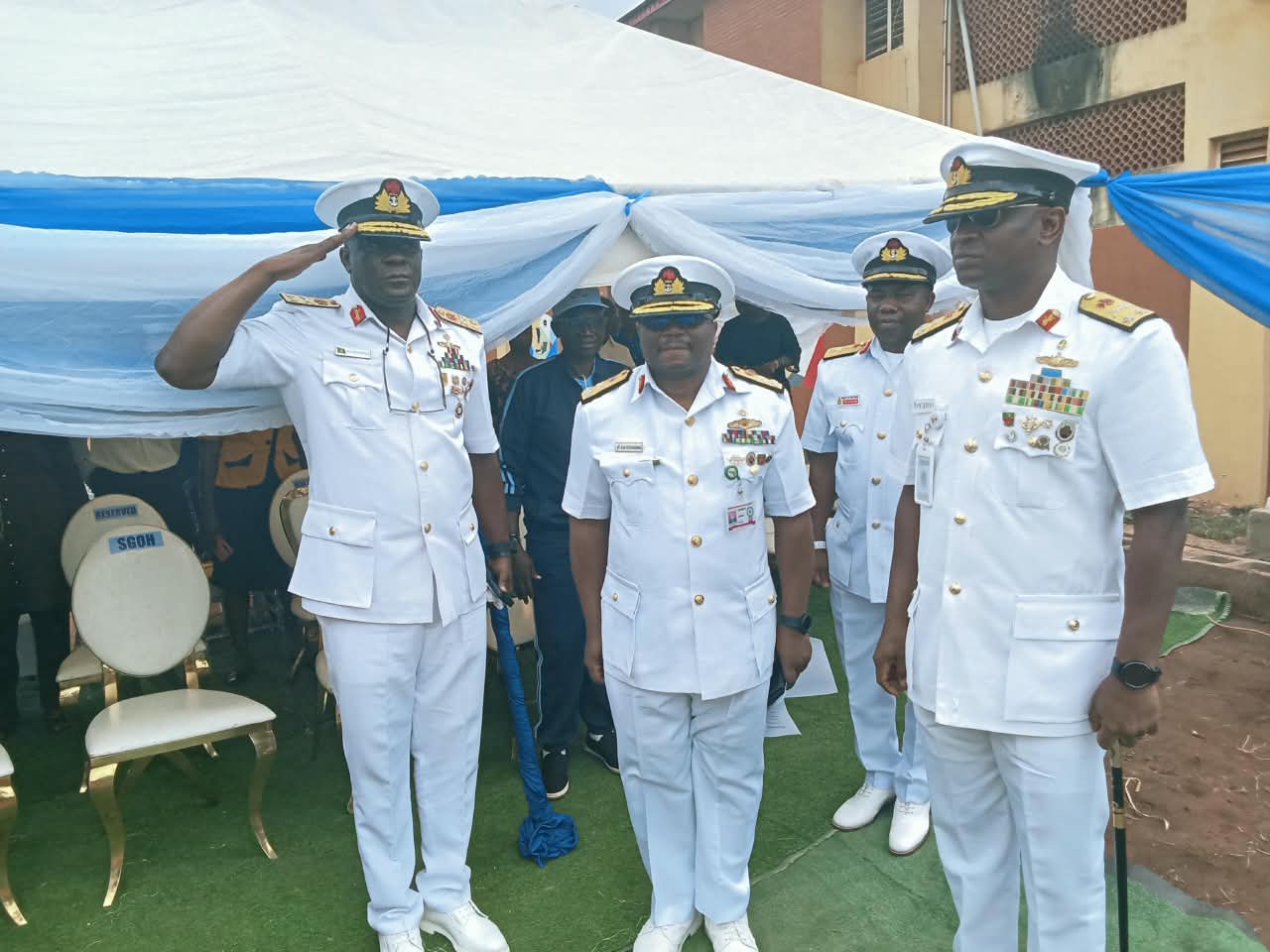
The Director of Manning at Naval Headquarters, Rear Admiral Kolawole Oguntuga, who represented the Chief of the Naval Staff, Vice Admiral Idi Abbas, said stronger partnerships with communities would enable the Navy to obtain timely and actionable intelligence to identify criminal elements and prevent security threats.
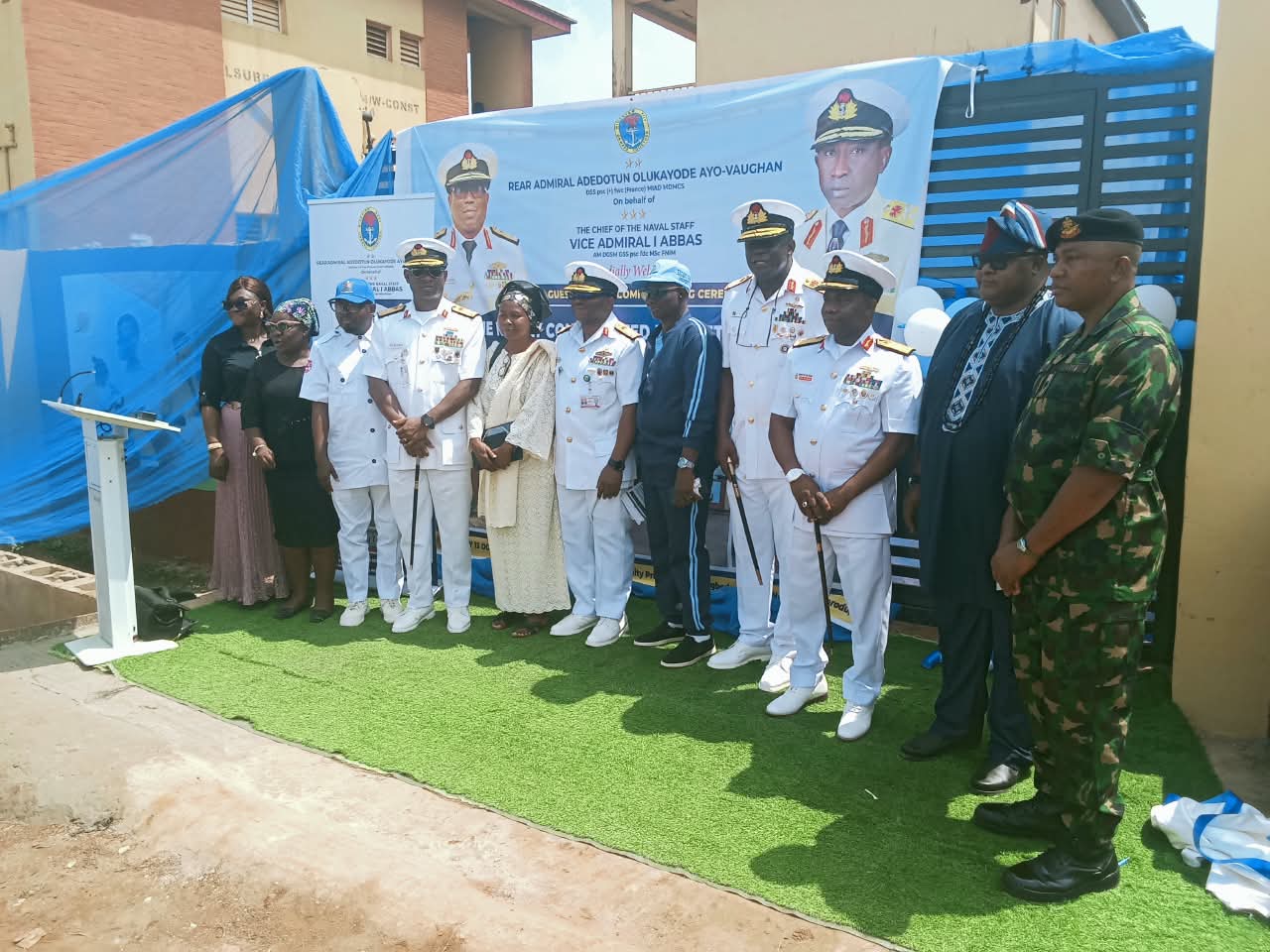
Oguntuga spoke during the commissioning of a Quick Impact Project at Omolaye Community Primary School in Agbede, Ikorodu, Lagos State, where a perimeter fence and other facilities were provided to improve security and the learning environment.
He described the initiative as one of the strategic pillars of the Chief of the Naval Staff aimed at giving back to society and bringing the military closer to the people.
According to him, effective security operations depend largely on cooperation between security agencies and residents of the communities where they operate.
He explained that although the Navy’s primary responsibility includes combating crime in the maritime environment, criminal activities on waterways are often linked to developments on land, making community collaboration essential to addressing insecurity.
“For us to tackle crimes of any form, be it maritime or on land, we need strategic partners in order to get information. One of the major partners is the community,” he said.
The naval officer added that implementing projects that directly benefit residents would encourage communities to support security agencies by providing intelligence capable of leading to the identification and arrest of criminal suspects.
He said the Navy would continue to pursue the initiative to strengthen its relationship with host communities and improve access to information needed for effective security operations.
On the project at Omolaye Community Primary School, Oguntuga said the intervention was designed to address security challenges that had exposed the school to theft and vandalism.
He explained that the absence of a perimeter fence had allowed unauthorised persons to gain access to the school by crossing a drainage channel, entering classrooms and stealing school property, including chairs and ceiling fans.

“Before now, individuals could just cross the drainage and enter the classrooms to remove whatever they wanted, including chairs and ceiling fans. The following day, the students would come and have nowhere to stay,” he said.
He noted that the new fence would restrict unauthorised access, clearly define the school’s boundaries and make it easier to identify individuals who trespass on the premises.
The project also included the installation of solar-powered lights to illuminate the school at night and discourage criminal activities.
According to him, the combination of the perimeter fence and lighting system would provide additional protection for school facilities while creating a safer environment for pupils and teachers.
Beyond physical security, the intervention included the provision of a computer to expose pupils to technology and equip them with skills relevant to an increasingly digital world.
Oguntuga said the Navy wanted pupils in beneficiary communities to keep pace with global technological developments and become better prepared for future leadership responsibilities.
“We want the students to also key into what is happening globally so that we will produce leaders that are well-informed in line with global best practice,” he said.
He stressed that the Quick Impact Project Scheme went beyond infrastructure provision, explaining that its broader objective was to build confidence between the Navy and the communities it serves.
He maintained that community trust and cooperation remained critical to security operations, particularly in the maritime domain, where timely information could help security agencies detect and prevent criminal activities.
The initiative reflects the Navy’s approach of complementing operational activities with community-focused interventions aimed at addressing local needs, improving public confidence and encouraging residents to cooperate with security agencies.
Through the Quick Impact Project Scheme, the service seeks to strengthen relationships with host communities while supporting security, education and grassroots development within its areas of responsibility.
Rear Admiral Adedotun Ayo-Vaughan initiated the project, which was executed at Omolaye Community Primary School in Agbede, Ikorodu, Lagos State.