








A class of landing vessels first introduced by the Nigerian Navy is set to play a central role in future amphibious operations of the United States and Australia, following its adoption for major defence programmes.
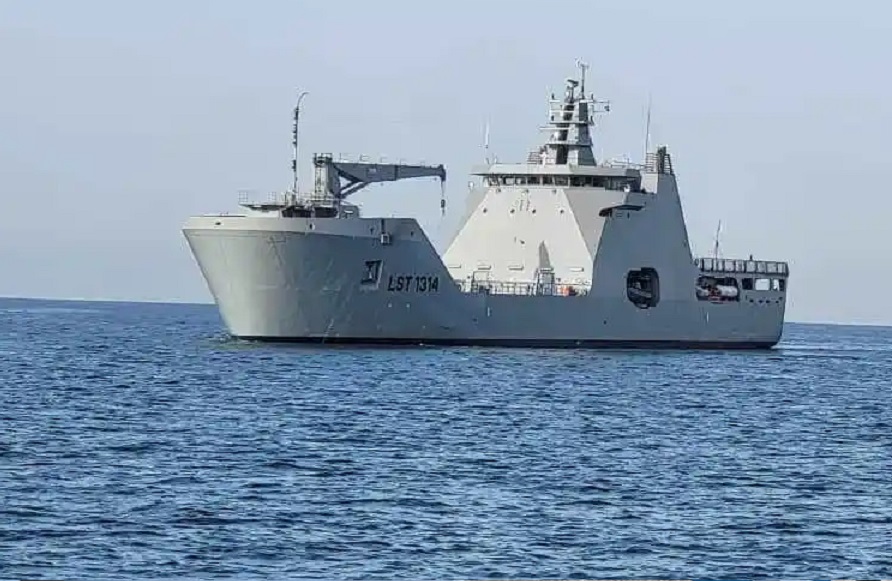
The vessels, based on the LST-100 design developed by Dutch shipbuilder Damen Shipyards Group, were initially built in the United Arab Emirates and debuted by Nigeria before attracting international attention.
Recent defence decisions by the United States Marine Corps and the Australian Defence Force have seen both countries select the design to meet their need for modern littoral manoeuvre platforms, particularly in the Indo-Pacific region.
The LST-100, a smaller but highly versatile amphibious vessel, is designed to transport troops, vehicles and equipment across coastal and archipelagic environments, supporting distributed military operations.
Nigeria’s own vessel, NNS Kada, was constructed between 2019 and 2021 at the Albwardy Damen shipyard in the UAE and delivered in 2022 after a 56-day voyage.
The 2,800-ton ship, one of the largest in Nigeria’s fleet, marked a significant leap in the Navy’s strategic sealift capability.
Shortly after commissioning, NNS Kada was deployed to support the Economic Community of West African States mission in Guinea-Bissau, transporting personnel and light armoured vehicles amid regional instability.
Since then, the vessel has been actively engaged in maritime exercises and logistics operations supporting regional and continental peacekeeping efforts, including missions under the African Union.
The ship has also drawn international interest. An Australian delegation led by Brigadier Colin Bassett visited Nigeria to study the vessel’s operational capabilities as part of Canberra’s fleet renewal programme.
Australia plans to acquire eight similar vessels to support the movement of tanks, infantry fighting vehicles and rocket artillery systems, with construction scheduled between 2026 and 2028.
In the United States, the vessels—designated as Landing Ship Mediums—are expected to support the Marine Corps’ evolving operational strategy focused on dispersed, agile forces capable of countering maritime threats.
The adoption of the LST-100 design by both countries underscores its growing reputation as a modern, flexible platform suited for contemporary naval operations.
Analysts say Nigeria’s early acquisition and deployment of the vessel has positioned it as a reference point in the evolution of next-generation amphibious capabilities.