



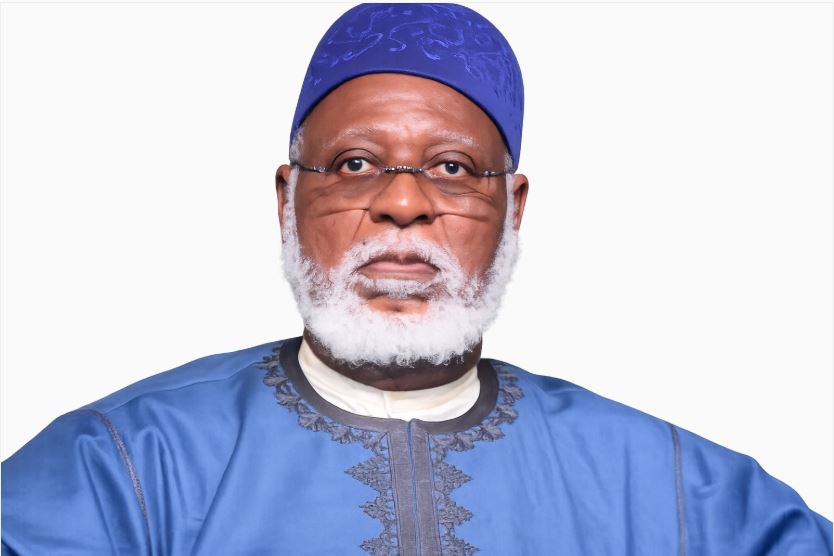
Former Head of State, General Abdulsalami Abubakar, has revealed dramatic details surrounding the death of former military ruler, Sani Abacha, describing how he was unexpectedly summoned to the Presidential Villa and locked in a waiting room before learning of Abacha’s demise.
Abdulsalami, who succeeded Abacha as Nigeria’s military Head of State following the latter’s death on June 8, 1998, disclosed the incident in his autobiography titled Call of Duty.

According to him, the events began in the early hours of June 8 when he received a call informing him that Abacha wanted to see him urgently.
At the time, Abdulsalami said he feared he might be assigned to represent Nigeria at an ECOWAS summit in Togo, a responsibility he had frequently undertaken as the government’s de facto second-in-command following the detention of Lt.-Gen. Oladipo Diya over an alleged coup plot.
Recalling the incident, he said he informed his wife of his concerns and instructed his orderly to prepare his travel bag in anticipation of a possible trip.
“On Monday, June 8, I received a call very early in the morning that he wanted to see me,” Abdulsalami wrote.
“I quietly prayed that he would not send me to Togo where there was going to be an ECOWAS summit. I was tired of going everywhere.”
He said a second call stressing the urgency of the meeting prompted him to leave for the Presidential Villa dressed casually in a tracksuit and slippers rather than his military uniform.
However, upon arrival, he was directed to a waiting room and told that Abacha was in his office.
Abdulsalami noted that the development immediately struck him as unusual because he had always enjoyed direct access to the Head of State regardless of who was with him.
After waiting for about 30 minutes, he was joined by Major-General Ishaya Bamaiyi. The two men remained in the room for more than an hour before Abdulsalami decided to seek an explanation.
To his surprise, he discovered that the door to the waiting room had been locked from the outside.
“I decided to go and see Abacha by any means because I could not understand why I should be kept that long,” he wrote.
“To my greatest surprise, the door of the waiting room had been locked. I asked Bamaiyi if he was aware that we had been locked inside. Something kept telling me that something was wrong but I could not place a finger on it.”
The situation was eventually clarified when the then Inspector-General of Police, Ibrahim Coomassie, arrived and opened the door.
According to Abdulsalami, Coomassie asked them to accompany him to Abacha’s residence, where he finally disclosed the reason for the unusual developments.
“As we walked towards the residence, I informed him that I was told Abacha was at the office,” Abdulsalami recalled.
“It was at this stage that he informed me that Abacha was dead. I was shocked.”
The former military leader said he immediately demanded to know what had happened but was not given any explanation at the time.
Abacha’s sudden death on June 8, 1998, marked a turning point in Nigeria’s political history, paving the way for Abdulsalami’s emergence as Head of State and the subsequent transition programme that culminated in the return to democratic rule in 1999.