









By Philip Nwosu
In the evolving theatre of modern warfare, few technologies have altered the rules of engagement as dramatically as the drone.
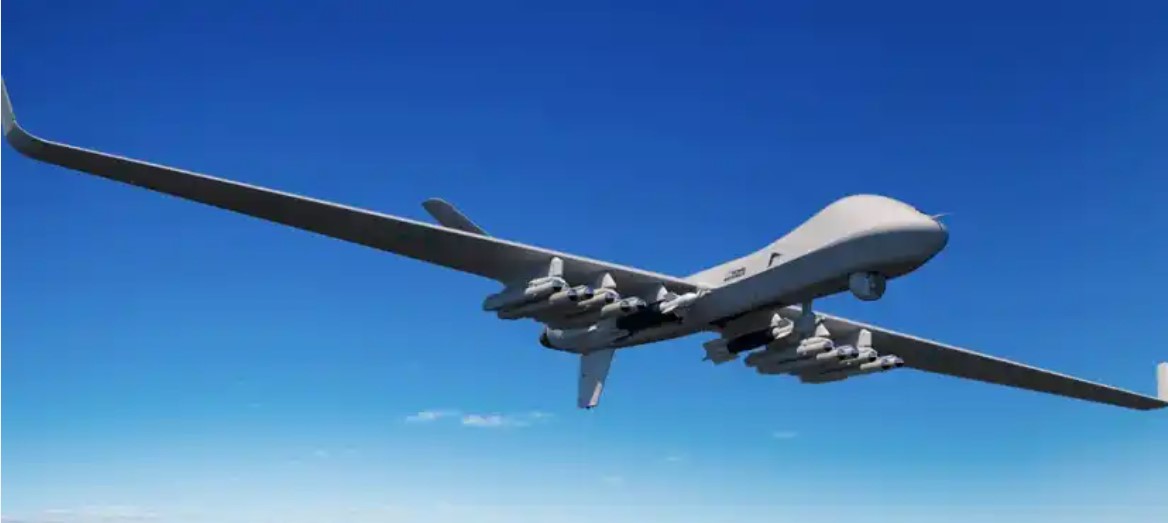
Once confined to surveillance roles, unmanned aerial vehicles (UAVs) have rapidly transformed into lethal attack weapons, capable of striking targets with precision, persistence and relative anonymity.
From the battlefields of Ukraine to the deserts of the Middle East, drones are no longer auxiliary tools—they are now central actors in combat strategy.
Recent conflicts have revealed a stark reality: the age of drone warfare is not emerging—it has already arrived.
From Eyes in the Sky to Weapons of War
Initially developed for intelligence, surveillance and reconnaissance (ISR), drones provided militaries with a safer alternative to manned aircraft. Over time, however, advances in miniaturisation, artificial intelligence and remote-control systems enabled these platforms to carry weapons and execute strikes.
Today, drones perform a full spectrum of combat roles—from identifying targets to delivering lethal payloads. They can be equipped with missiles, explosives or improvised munitions, transforming them into precision strike platforms.
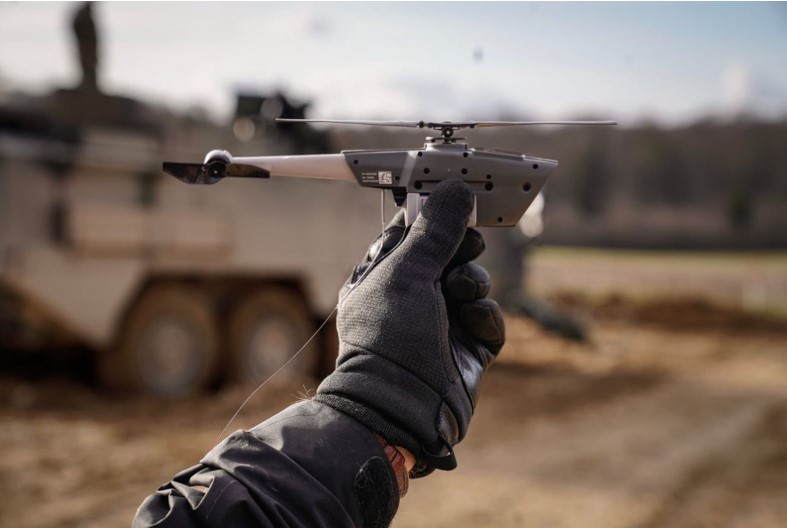
Modern attack drones fall into several categories. These include large unmanned combat aerial vehicles (UCAVs), loitering munitions—often called “kamikaze drones”—and small first-person-view (FPV) drones, which are manually piloted into targets.
The significance of this evolution lies in accessibility. What was once the preserve of advanced militaries is now available to smaller states and even non-state actors.
The Ukraine War: A Drone Battlefield Laboratory
No conflict has demonstrated the transformative power of drone warfare more vividly than the ongoing war between Russia and Ukraine. Both sides have deployed thousands of drones, turning the conflict into what analysts describe as a “drone-centric war.”
Drone strikes are now routine. In March 2026 alone, Russia launched over 200 drones in a single coordinated attack on Kyiv, with Ukrainian defences intercepting most of them. These attacks are not isolated incidents; they are part of a sustained strategy involving mass drone deployments alongside missiles.
In another large-scale offensive, hundreds of drones were used simultaneously to overwhelm air defences, demonstrating how swarm tactics are redefining aerial combat.
More striking is the growing sophistication of these systems. Russia has begun deploying drones connected by fibre-optic cables, making them immune to electronic jamming—a key countermeasure in modern warfare. This innovation underscores a broader trend: the continuous adaptation of drone technology in response to battlefield challenges.
Ukraine, on its part, has developed long-range attack drones capable of striking deep into enemy territory, targeting infrastructure such as oil refineries and military bases. The implication is clear—geographical distance is no longer a reliable shield.
The Rise of Cheap but Deadly Weapons
Perhaps the most disruptive aspect of drone warfare is cost. Unlike traditional weapons systems such as fighter jets or ballistic missiles, drones can be produced at a fraction of the cost.
Some widely used models cost as little as $20,000 to $50,000, yet they can inflict damage that requires million-dollar defence systems to counter. This economic asymmetry has shifted the balance of power, enabling weaker actors to challenge technologically superior adversaries.
The emergence of low-cost FPV drones has further intensified this shift. These devices, often modified from commercial models, are fitted with explosives and guided directly into targets by operators wearing virtual reality headsets.
This “democratisation” of airpower means that insurgent groups, militias and even individuals can now deploy capabilities once reserved for nation-states.
Precision, Persistence and Psychological Impact
Drones offer several tactical advantages that make them particularly effective as attack weapons. Their ability to loiter over a target area allows operators to wait for the optimal moment to strike, increasing accuracy and reducing collateral damage—at least in theory.
They also provide real-time intelligence, enabling a seamless “find, fix and finish” cycle in military operations.
However, beyond their physical impact, drones exert a profound psychological effect. The constant presence of unmanned aircraft overhead creates a climate of fear and uncertainty. Civilians and soldiers alike are aware that an attack can come at any moment, often without warning.
Reports from conflict zones indicate that drones have been used not only against military targets but also against civilian populations, raising serious ethical and legal concerns. In some cases, explosive-laden drones have been deployed directly against individuals, blurring the line between warfare and targeted assassination.
Swarm Warfare and Artificial Intelligence
The future of drone warfare lies in autonomy and scale. Military planners are increasingly exploring the use of drone swarms—large numbers of coordinated UAVs that can overwhelm enemy defences.
Artificial intelligence is expected to play a key role in this evolution. AI-enabled drones can potentially identify targets, navigate complex environments and execute attacks with minimal human intervention.
There are already reports of experimental systems capable of selecting targets autonomously, raising ethical questions about the role of human judgment in lethal decision-making.
Swarm tactics also present a significant challenge for traditional air defence systems, which are designed to intercept a limited number of high-value targets, not hundreds of low-cost drones attacking simultaneously.
Countermeasures and the Arms Race
As drones become more prevalent, so too do efforts to counter them. Electronic warfare systems, anti-drone guns and interceptor drones are now integral components of modern defence strategies.
Interestingly, drones themselves are being used to fight other drones. Ukraine, for instance, has deployed interceptor drones specifically designed to destroy incoming UAVs, marking a new phase in aerial combat.
Yet, the rapid pace of innovation means that countermeasures often lag behind new developments. Each technological advance—whether in stealth, autonomy or communication—forces a corresponding evolution in defence systems.
Ethical and Legal Implications
The widespread use of drones as attack weapons raises complex ethical questions. The ability to conduct remote strikes reduces the risk to military personnel but may also lower the threshold for the use of force.
Critics argue that drone warfare can lead to a “video game mentality,” where operators are physically removed from the consequences of their actions. Others point to the potential for misuse, particularly in targeting civilians or conducting extrajudicial killings.
International humanitarian law has struggled to keep pace with these developments. Issues such as accountability, proportionality and distinction between combatants and non-combatants are increasingly difficult to address in a drone-dominated battlespace.
A New Era of Warfare
The integration of drones into modern military strategy marks a fundamental shift in how wars are fought. They have redefined notions of air superiority, challenged traditional defence systems and introduced new ethical dilemmas.
More importantly, drones have levelled the playing field, allowing smaller actors to wield disproportionate influence in conflicts. As technology continues to evolve, their role is only expected to expand.
The battlefield of the future may not be dominated by tanks or fighter jets, but by swarms of unmanned systems operating with speed, precision and autonomy.
In this new era, the question is no longer whether drones will shape warfare—but how far their influence will extend, and at what cost to humanity.
Philip Nwosu, Defence Editor of The Sun Newspaper, writes from Lagos. phillipnwosu@yahoo.co.uk